Vietnam: A Compressed History
Two thousand years in one read — from the Hùng Kings through Chinese rule, dynasties, the French, the war, and Đổi Mới reform.
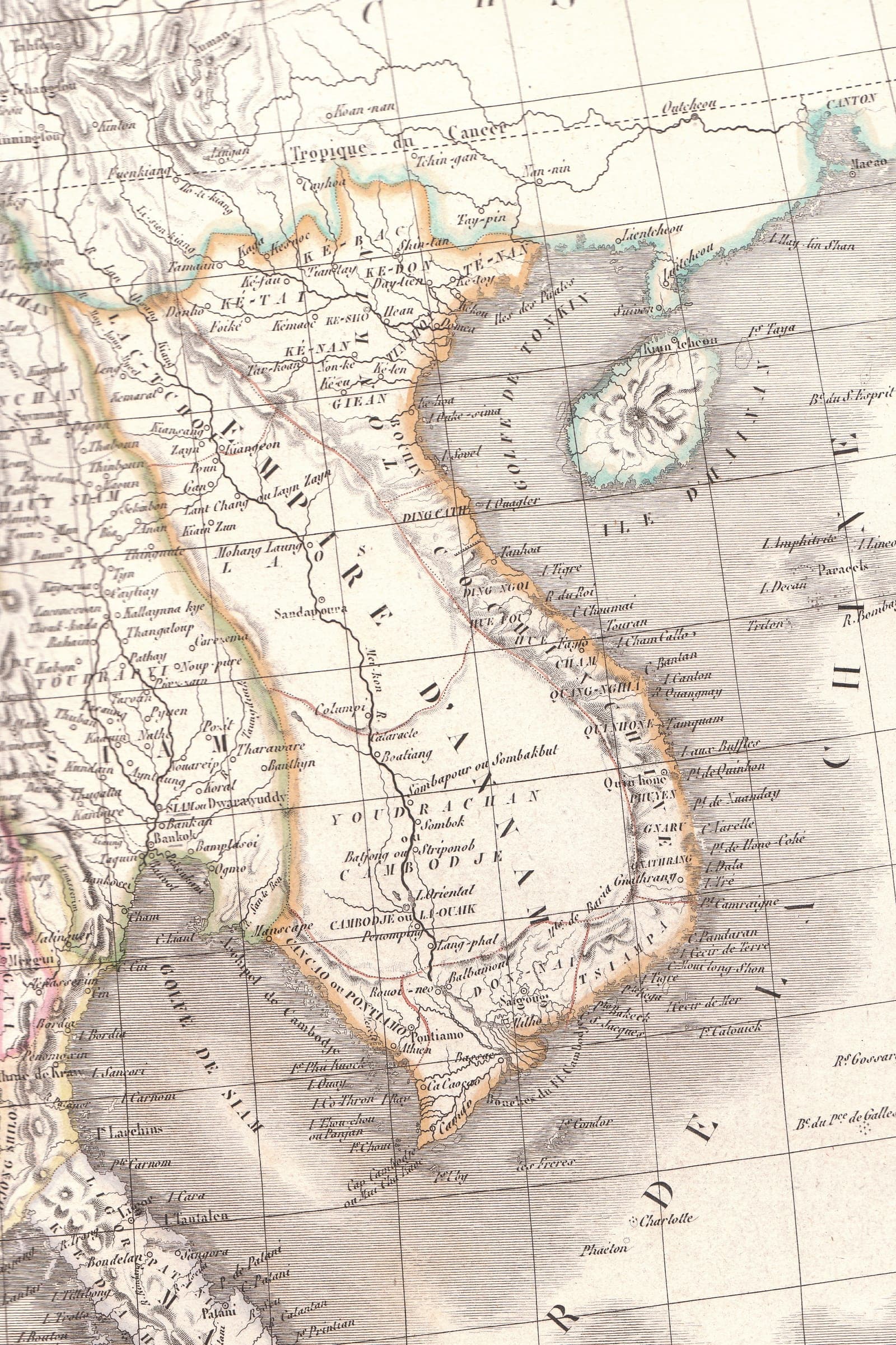
Vietnam's recorded history begins around 2879 BCE with the semi-legendary Hùng Kings of the Văn Lang kingdom. From there, the broad arc is: a thousand years of Chinese domination, a thousand years of independent dynasties, sixty years of French rule, thirty years of war and partition, and forty years of reform-era growth.
The early kingdoms (c. 700 BCE – 111 BCE)
The Đông Sơn culture in the Red River delta produced the bronze drums you still see in museums. The Âu Lạc kingdom — and its capital at Cổ Loa, just north of modern Hanoi — was absorbed by the Chinese Han Empire in 111 BCE.
Chinese rule (111 BCE – 938 CE)
For roughly a millennium, what is now northern Vietnam was a province of successive Chinese empires. The Vietnamese language, the script (until the 20th century), the bureaucracy, Confucianism, Mahayana Buddhism, even the imperial exam system — all entered then. Resistance was constant; the Trưng Sisters' rebellion in 40 CE is still a national touchstone.
Independence was finally won at the Battle of Bạch Đằng in 938, when Ngô Quyền defeated the Southern Han fleet by hiding iron-tipped stakes in the river bed.
The great dynasties (939 – 1858)
A sequence of dynasties — Lý, Trần, Lê, Nguyễn — extended the kingdom slowly southward, absorbing the Cham and the Khmer territories of the Mekong delta. The Trần dynasty famously repelled three Mongol invasions in the 13th century. The Lê dynasty produced the great legal code (the Hồng Đức) and pushed the southern border to roughly modern Cà Mau by the 17th century. The Nguyễn unified the country in 1802 under Emperor Gia Long and moved the capital to Huế.
French colonisation (1858 – 1954)
The French invaded Đà Nẵng in 1858 and steadily expanded control until they ruled all of Indochina by 1887. The colonial administration built railways, planted rubber, exported rice — and exploited labour ruthlessly. The Quốc Ngữ Latin-script writing system, originally a Jesuit invention, was promoted as the official script and quickly displaced classical Chinese.
Independence movements and partition (1945 – 1954)
Hồ Chí MinhHồ Chí Minh (Ho Chi Minh)hoh chee minLargest city in Vietnam, formerly Sài Gòn; the commercial and economic capital of the country in the south. declared independence in Hanoi on 2 September 1945. The French refused to leave; the First Indochina War followed, ending with the French defeat at Điện Biên Phủ in 1954. The Geneva Accords partitioned the country at the 17th parallel — North under Hồ Chí Minh's communist government, South under a US-backed Republic.
The American war (1955 – 1975)
What Vietnam calls the Kháng chiến chống Mỹ (Resistance War Against America) ran from the late 1950s to the fall of Saigon on 30 April 1975. The cost to Vietnam was staggering: roughly three million Vietnamese dead, the country devastated by bombing and chemical defoliants whose effects persist today.
See: The American war, briefly
Reunification and the lean years (1975 – 1986)
The reunified country attempted Soviet-style central planning. It did not work. Trade embargo, war with Khmer Rouge Cambodia, a brief war with China in 1979, hyperinflation, mass refugee flows — by the mid-1980s the country was in crisis.
Đổi Mới and the modern era (1986 – present)
In 1986, the Communist Party launched Đổi Mới — "renovation" — opening the economy to private enterprise and foreign investment while keeping single-party political control. The results have been dramatic: from one of the poorest countries in the world to a middle-income manufacturing powerhouse in a generation.
Today Vietnam has the second-fastest-growing economy in Asia, a 100-million-person population, and a delicate balancing act between Beijing, Washington, and ASEAN.
Timeline at a glance
| Year or period | Event |
|---|---|
| c. 2879 BCE | Legendary reign of the Hùng Kings; founding of Văn Lang kingdom |
| 111 BCE | Han conquest; beginning of 1,000 years of Chinese rule |
| 40 CE | Trưng Sisters' rebellion against Han occupation |
| 938 CE | Battle of Bạch Đằng; Ngô Quyền defeats Southern Han; Vietnamese independence |
| 13th century | Trần dynasty repels three Mongol invasions |
| 1802 | Emperor Gia Long unifies Vietnam; capital moves to Huế |
| 1858–1887 | French conquest of Indochina; colonial administration begins |
| 1945 | Hồ Chí Minh declares independence on 2 September |
| 1954 | French defeat at Điện Biên Phủ; partition at 17th parallel (Geneva Accords) |
| 1975 | Fall of Saigon; country reunified under communist control |
| 1986 | Đổi Mới launched; economy opens to private enterprise and foreign investment |
| 2000–present | Rapid industrialisation and middle-income growth |
Eras at a glance
| Era | Approximate years | Characterisation |
|---|---|---|
| Early kingdoms & Chinese rule | c. 700 BCE–938 CE | Bronze-age societies and millennium under Han/Chinese empires; Confucianism and Buddhism introduced |
| Great dynasties (Lý, Trần, Lê, Nguyễn) | 939–1858 | Southward territorial expansion; repulsion of Mongol invasions; classical legal codes |
| French colonial period | 1858–1954 | Industrial transformation, Quốc Ngữ adoption, and economic exploitation under colonial rule |
| War and partition | 1954–1975 | Divided nation; devastating 20-year conflict against American and South Vietnamese forces |
| Post-war austerity | 1975–1986 | Central planning, isolation, war with Cambodia and China; economic collapse |
| Đổi Mới and modern era | 1986–present | Market reforms, rapid growth, foreign investment, ascent to middle-income status |
Surviving sites you can visit today
- Hoa Lư (Ninh Bình province) — Former capitals of the Đinh and Early Lê dynasties; temples and caves amid karst landscape. Explore the North Vietnam region
- Thăng Long Citadel (Hanoi) — The imperial palace complex, originally built in 1010 by the Lý dynasty; now a UNESCO World Heritage site within the city center.
- Phát Diệm Cathedral (Ninh Bình) — Stone cathedral built 1875–1894 during French colonial rule; unique fusion of Vietnamese and French architecture. Visit Ninh Binh attractions
- Hue Citadel & Royal Tombs (Huế) — Seat of the Nguyễn emperors (1802–1945); walled city and mausoleums scattered along the Perfume River. Discover Central Vietnam
- Cu Chi Tunnels (Ho Chi Minh City region) — Underground network used during the American war; now a preserved historical site and museum.
Where to learn more
- Vietnam National Museum of History (Hanoi) — The primary repository for artefacts from all major periods, from Đông Sơn bronzes to French colonial instruments.
- Recommended reads: The Ethnology of Vietnam: The North (Kwang-Ching Liu); Gods, Kings, and Spirits from Korean Shamanism (shared cultural parallels); or simply the essays under French Colonial Era, Vietnam War Summary, and Đổi Mới Reform on this site.
- Regional deep-dives: Explore South Vietnam history and North Vietnam history pages for provincial timelines and local heritage highlights.
The short version: Vietnam has been continuously inhabited and politically organised for at least 2,500 years. It has spent most of that time defending itself against a larger neighbour to the north — and, more recently, building a modern economy at speed.
Continue reading
Comments
No comments yet.