Bún Chả: Hanoi's Other Famous Dish
Grilled pork, rice vermicelli, a bowl of warm sweet-sour dipping sauce, and a pile of herbs. Lunch in Hanoi at its best.
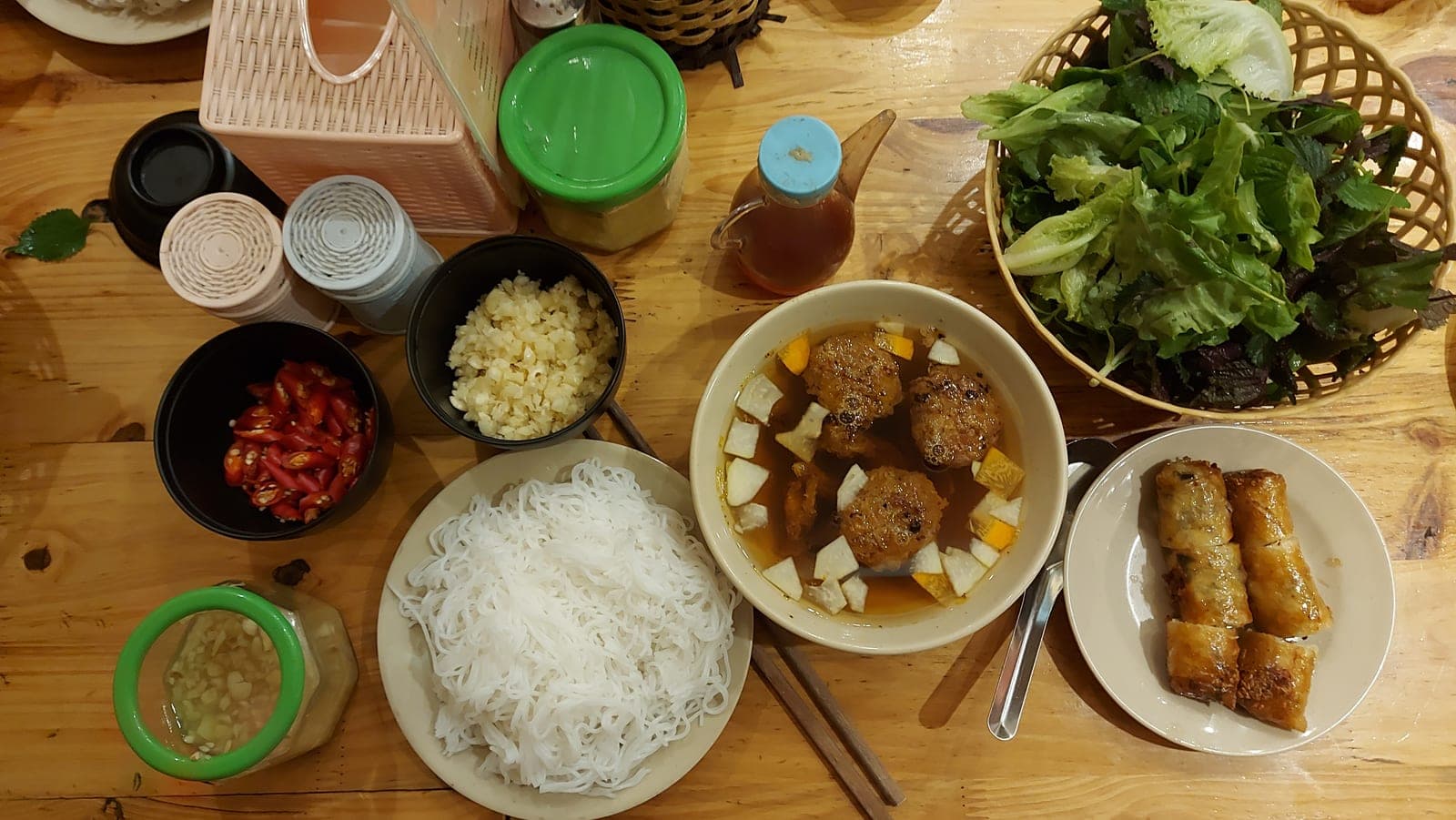
Bún chả is a Hanoi lunchtime institution. You smell it before you see it: charcoal smoke from small pavement grills cooking thumb-sized pork patties and slivers of pork belly.
The dish has three components on the table:
- Bún — a basket of cold, slightly chewy round rice vermicelli.
- Chả — the grilled pork, in two forms (patties and belly slices), submerged in a warm, sweet-tangy fish-sauce broth with sliced green papaya and carrot.
- A platter of fresh herbs — lettuce, mint, perilla (tía tô), Vietnamese balm, coriander, bean sprouts.
You pinch noodles and herbs together, dip into the broth, eat with the pork. Some people put it all into the broth bowl; some keep them separate. There's no wrong way.
A signature meal
Bún chả is one of those dishes that became globally famous in a single moment: Anthony Bourdain ate it with Barack Obama at Bún Chả Hương Liên in Hanoi in 2016. The bar of the joint still has the "Obama table" sealed in a glass case. The dish is genuinely good there, even if the queue is overlong.
Where to find it
- Hanoi and the Red River delta — almost any lunch shop. Look for the smoke.
- Saigon — exists but is not the same dish; harder to find a great version.
- Outside Vietnam — bún chảBún Chả (Bun Cha)boon chahHanoi specialty of grilled pork patties and belly served with vermicelli noodles, fresh herbs, and a dipping broth — famously eaten by Barack Obama and Anthony Bourdain. is on most "modern Vietnamese" restaurant menus globally; the patties are often less smoky than the original because the original is grilled over actual charcoal on a pavement.
When to eat it
Lunchtime. Most dedicated bún chả shops are open from late morning until early afternoon and close once they run out of pork. Going at 12:30 is reasonable; going at 2 pm may be too late.
Add-ons that go well
- A side of nem (deep-fried Vietnamese spring rolls) — often offered.
- A glass of trà đá (iced tea) — usually free or very cheap.
- A bottle of cold beer.
Pronunciation
Bún Chả (pronounced boon cha — the ú is a short 'oo', and chả rhymes with 'ah'). The name literally means "vermicelli" (bún) and "grilled meat" (chả).
How to order it
Ask for "Bún chả, vui lòng" (boon cha vwee long) — "Bún chả, please". At a dedicated bún chả shop, simply say "Một suất" (mot suat) — "one serving" — and they know what you want. If you want extra pork, add "Thêm chả nữa" (them cha nua) — "more pork, please".
Price ranges
| Tier | Indicative price (VND) | USD |
|---|---|---|
| Street stall | 40,000–60,000 | $1.60–$2.40 |
| Casual restaurant | 70,000–100,000 | $2.80–$4.00 |
| Tourist-trap zone | 150,000–250,000 | $6.00–$10.00 |
Street stalls around the Old Quarter serve the most authentic bún chả at these prices; tourist areas near Hoàn Kiếm Lake charge 3–4× more for the same dish.
Best three neighbourhoods to try it
- Hanoi Old Quarter — dozens of dedicated bún chả stalls; the original heartland. Go early (11:30 am) to avoid queues.
- Hoàng Mai district — where many locals prefer; less crowded than the Old Quarter, equally smoky and excellent.
- Near Bún Chả Hương Liên (Hàng Manh street) — the famous Obama table; worth the queue at least once, though you pay tourist prices.
Common variants
- Northern (Hanoi) style — heavy charcoal smoke, patties are small and dense, broth is warm and sweet-sour. Meat is the star.
- Southern (Saigon) style — lighter, often served cold or room temperature, more herbs and vegetables, less charcoal flavour. Harder to find outside Hanoi.
- With or without papaya — northern broth includes shredded green papaya and carrot; some stalls omit it or let you choose.
How to order in Vietnamese
| What you want | Vietnamese | Approximate pronunciation |
|---|---|---|
| One bowl / plate | Một suất | Mot suat |
| Spicy, please | Cay một chút | Cai mot chut |
| Not spicy | Không cay | Khong cai |
| No cilantro | Không mùi tây | Khong mui tay |
| No coriander | Không tiêu | Khong tieu |
| The bill, please | Tính tiền, vui lòng | Tinh tien, vwee long |
| Takeaway | Mang về | Mang ve |
Price ranges
| Tier | Approximate price (VND) | Where you'll find it |
|---|---|---|
| Street stall | 40,000–70,000 | Pavement vendors in Hanoi's Old Quarter and beyond |
| Local sit-down restaurant | 80,000–120,000 | Dedicated bún chả shops in residential neighbourhoods |
| Tourist-oriented restaurant | 150,000–300,000 | Areas near Hoàn Kiếm Lake or famous establishments |
Best neighbourhoods to find it
- Hanoi Old Quarter — the heartland of bún chả, with dozens of dedicated stalls and the heaviest smoke. Arrive by 11:30 am to avoid queues.
- Hoàng Mai District, Hanoi — where locals prefer; equally excellent and smoky with shorter waits than the Old Quarter.
- Tây Hồ District, Hanoi — quieter neighbourhoods with family-run stalls serving morning commuters.
Regional variants
- Northern (Hanoi) — broth is warm, sweet-sour, and made from slow-simmered pork bones. Patties are small, dense, and charred from direct charcoal heat. Shredded green papaya and carrot typically submerged in the broth.
- Central Vietnam — rarer; when found, the broth tends to be lighter and sometimes served at room temperature, with more emphasis on fresh herbs rather than the warm sauce.
- Southern (Ho Chi Minh City) — lighter overall, often served cold or tepid. More raw vegetables and greens on the side. The charcoal flavour is less pronounced because grilling is gentler.
How to tell a good version from a bad one
- Broth clarity — should be translucent amber, not murky or greasy. Cloudiness may indicate the stock was not simmered long enough.
- Noodle texture — bún should be delicate and slightly chewy, not mushy or gluey. The strands should separate easily with chopsticks.
- Pork colour and char — patties should show dark, even caramelisation from charcoal; belly slices should be tender with crispy edges. Pale or gummy meat suggests insufficient grilling time.
- Herb freshness — mint, perilla, and lettuce should smell aromatic and feel crisp, not wilted or slimy. Many good vendors refresh their herb platters every few hours.
- Queue as a proxy — a lunch-hour queue (10+ people) at an unmarked stall typically signals quality and consistency; however, the presence of a queue alone does not guarantee excellence in tourist zones.
Frequently asked questions
Is bún chả the same in Hanoi and Saigon?
What time of day should I eat bún chả?
How much does bún chả typically cost in Hanoi?
Continue reading
Comments
No comments yet.