Phở: Vietnam's National Dish
A clear noodle soup with deep beef or chicken broth — Vietnam's most exported food. How it's made, how to order it, and the north-south split.
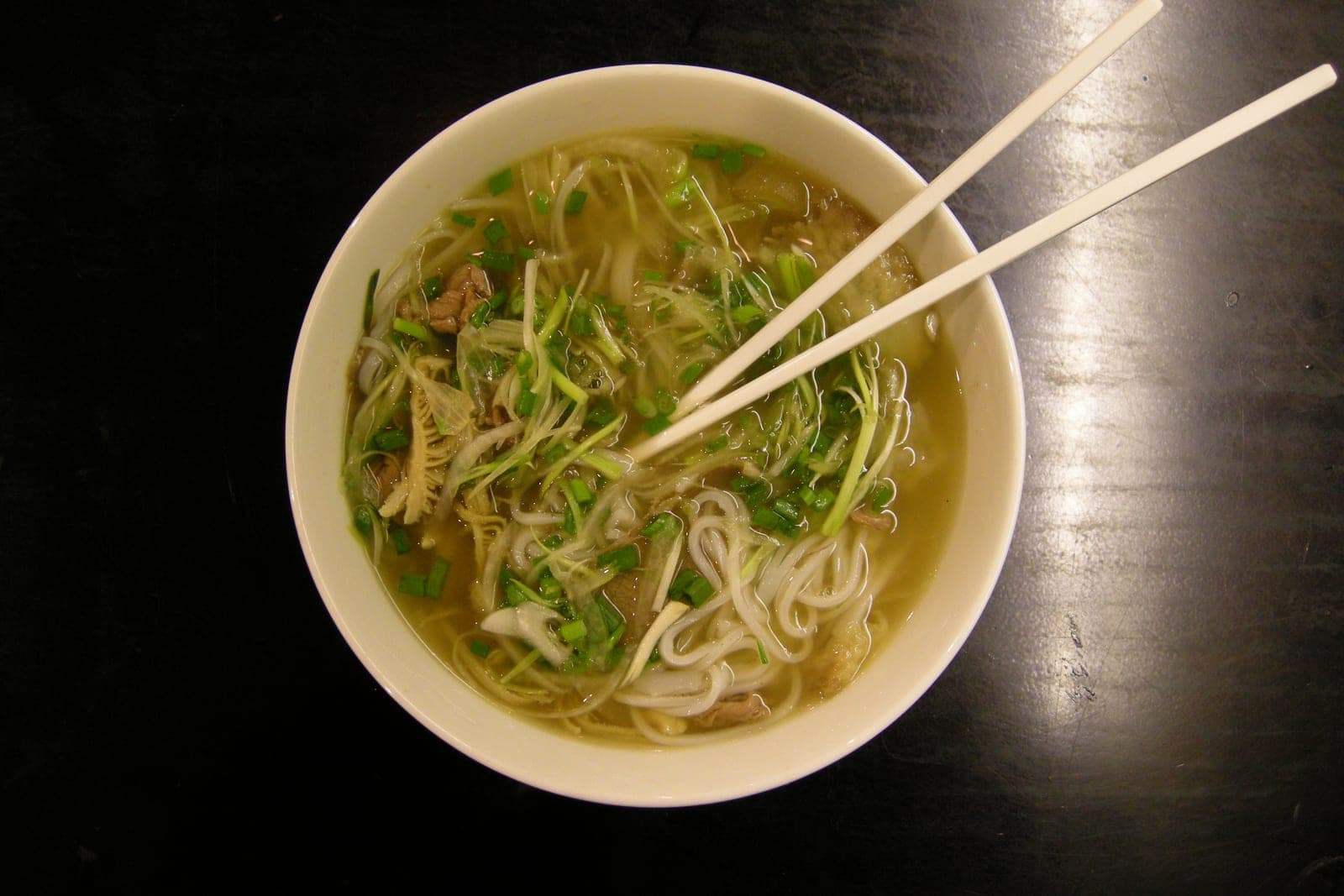
Phở is a clear, aromatic noodle soup made with beef or chicken broth, flat rice noodles, sliced meat, and a tangle of fresh herbs. It is the country's most internationally recognised dish — though it didn't exist as we know it 150 years ago.
A brief history
Phở emerged in the early 20th century in the Red River delta, around Hanoi. It probably evolved from a combination of:
- The Vietnamese rice-noodle tradition (broths and noodles were not new).
- French colonial beef consumption — beef had been rare in Vietnamese cooking before the French; pot-au-feu may have contributed both the bone broth and the slow-simmered approach.
- Cantonese influence — the use of star anise, cinnamon, and other warm spices comes from southern Chinese cuisine.
By the 1920s phởPhở (Pho)fuhVietnam's national noodle soup: a clear beef or chicken broth served with flat rice noodles, fresh herbs, and lime. was a recognised street food in Hanoi. The 1954 partition sent hundreds of thousands of Northern refugees south, and they brought phở with them — establishing it in Saigon, where it evolved differently.
The northern and southern split
| Element | Northern (Hanoi) | Southern (Saigon) |
|---|---|---|
| Broth | Lean, clear, gently aromatic | Richer, sometimes sweeter |
| Garnish | Spring onion, a wedge of lime, chilli | Plate of bean sprouts, basil, sawtooth herb, lime, chilli |
| Sauces | Vinegar with chilli, occasionally sriracha | Hoisin and sriracha standard |
| Noodles | Slightly narrower | Wider, softer |
The northern version is the older one. Hanoi purists consider adding bean sprouts and hoisin sauce a southern corruption. Southerners consider Hanoi phở austere. Both versions are excellent.
The main variants
- Phở bò — beef phở. Within this:
- Phở tái — rare beef (slices added raw, cook in the hot broth)
- Phở chín — fully cooked beef
- Phở tái nạm — rare beef + flank
- Phở gân — beef tendon
- Phở viên — beef meatballs
- Phở đặc biệt — "special," everything in
- Phở gà — chicken phở. Lighter; common in some Hanoi shops that don't do beef.
How to order and eat
- Walk into the shop and either point to what someone else is eating, or say Một bát phở tái (one bowl, rare beef) or whatever variant you want.
- The bowl arrives with broth, noodles, and meat. Herbs and sauces come separately in the south, together with a squeeze of lime in the north.
- Adjust to taste — squeeze lime, add chilli, herbs, hoisin/sriracha (if southern style). Don't add sauce in the bowl before tasting; the broth is the dish.
- Eat with chopsticks for noodles, spoon for broth.
- Slurping is fine. Speed is fine. Phở is breakfast or lunch; eating it for dinner is regional.
When and where
- Phở is a breakfast and lunch dish. Most dedicated phở shops close by mid-afternoon and have been simmering broth since the small hours.
- The best shops are usually the busiest at 7 am.
- Hanoi: phở Bát Đàn, phở Lý Quốc Sư, phở Thìn (the lo-mei version with stir-fried beef on top, served with the broth poured over — a regional invention).
- Saigon: phở Hoà Pasteur, phở Quỳnh, hundreds of corner-shop options.
Phở at home
Restaurant phở is a 6–8 hour broth project — beef bones roasted, charred onion and ginger, star anise, cassia bark, cardamom, fennel, clove. Home cooks sometimes use chicken bones and shorten it; instant phở packets exist and are decent.
Phở is one of those dishes where a half-decent version is everywhere in Vietnam, and a transcendent version is rare but findable.
Pronunciation
Phở (pronounced fuh — the ơ is a short 'uh', not 'oh'). The name comes from the earlier dish phần (flat noodles) and has no exact French origin despite colonial timing.
How to order it
- Một bát phở bò tái (one bowl of rare beef phở) — the most common ask.
- Phở gà (chicken phở) — lighter, common in Hanoi shops focused on poultry.
- Phở đặc biệt (special phở — everything in it) — beef, tendon, meatball, flank.
Price ranges
| Tier | Indicative price (VND) | USD |
|---|---|---|
| Street stall | 40,000–80,000 | 1.60–3.20 |
| Casual restaurant | 80,000–150,000 | 3.20–6.00 |
| Tourist-trap zone | 150,000–350,000 | 6.00–14.00 |
Best three neighbourhoods to try it
- Bát Đàn (Hanoi) — the historic phở quarter, dozens of dedicated shops, each with a 50+ year reputation.
- Pasteur (Saigon) — tourist-aware but authentic; phở Hoà Pasteur is the flagship; southern style with hoisin + sriracha.
- Thang Long (Hanoi suburbs) — local workingmen phở, lean broth, no garnish parade, cheap, packed by 6:30 am.
Common variants
- Northern vs southern: Hanoi phở is lean and austere; Saigon's is richer and sweeter, served with a full garnish plate.
- Protein: tái (rare beef cooks in the broth), chín (cooked), gân (tendon), viên (meatball), nạm (flank).
- Serving style: Hanoi tradition is a small bowl + one saucer of fresh spring onion + lime + chilli; Saigon bowls are larger with the garnish already piled on or on the side.
Continue reading
Comments
No comments yet.