Đà Nẵng: Beach City of the Central Coast
Vietnam's third-largest city — beaches, the Marble Mountains, the Hải Vân pass, the Golden Bridge, and a clean modern feel.
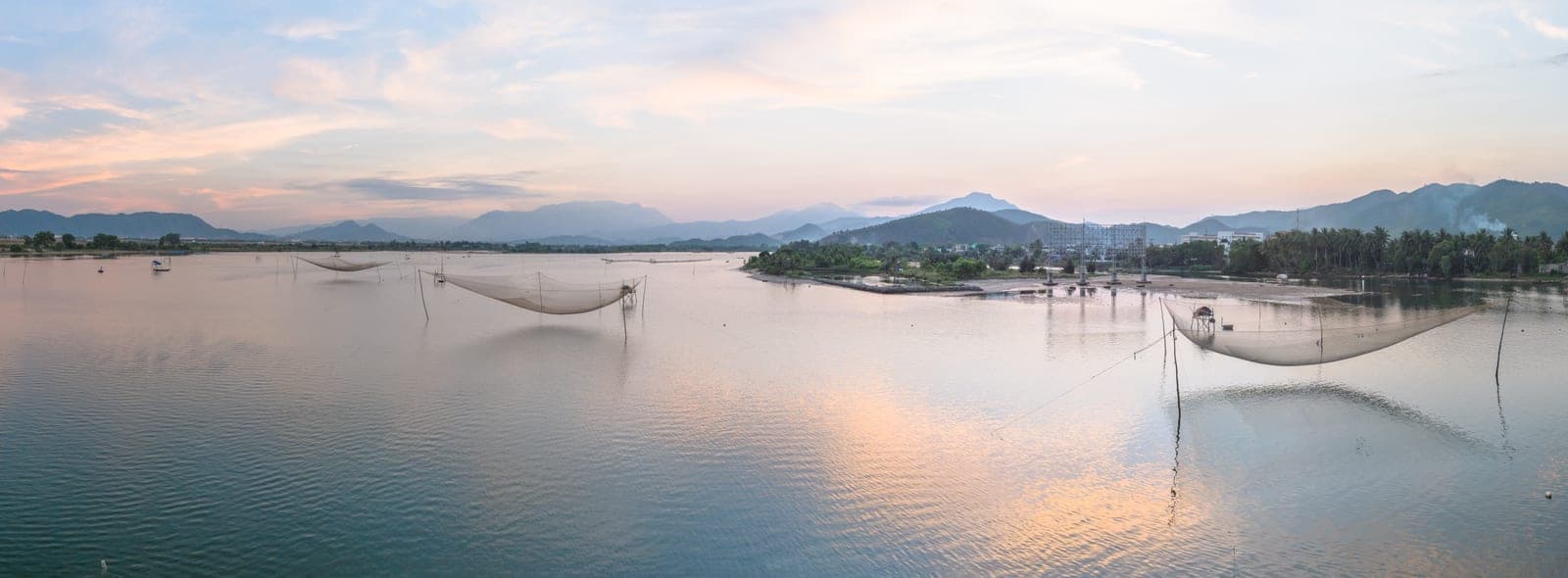
Đà NẵngĐà Nẵng (Da Nang)dah nangMajor coastal city in central Vietnam, known for its beaches, the Marble Mountains, and modern infrastructure. is Vietnam's third-largest city and the country's main central-coast hub. About 1.2 million people, with a long sandy beach, a small but growing skyline, and a markedly modern, organised feel compared with Hanoi or HCMC.
The city is the natural base for visiting Huế (1.5 hours north over the Hải Vân pass) and Hội An (30 minutes south), both of which most people prefer to sleep in.
What to see in Đà Nẵng itself
- Mỹ Khê Beach — the long beach east of the city; clean, broad, well-developed. Surf is small to moderate.
- Marble Mountains (Ngũ Hành Sơn) — five limestone hills with caves, shrines, and pagodas. Half a day to climb.
- Dragon Bridge — a kitsch but fun yellow steel dragon over the Hàn River; breathes fire (briefly) Saturday and Sunday nights.
- Sơn Trà peninsula — a hilly green peninsula north-east of the city. Lady Buddha statue, monkeys (genuinely wild rhesus monkeys; keep distance), good viewpoints.
- Museum of Cham Sculpture — the world's best collection of Cham stone sculpture; small but excellent.
Day trips from Đà Nẵng
- Hội An — 30 minutes south, much more atmospheric. Most people sleep here for at least a night.
- Huế — 1.5 hours north via the Hải Vân tunnel or 2.5 hours via the spectacular Hải Vân pass.
- Bà Nà Hills — the Golden Bridge (the famous hands one) is here. A theme park resort on a mountain top, accessed by long cable car. Crowded; pricey; the bridge itself is genuinely beautiful at golden hour, but the surrounding fake French village experience is what you're paying for.
- My Son sanctuary — 4th-13th century Cham brick towers, partly ruined by wartime bombing. About 1 hour south-west.
The Hải Vân pass
The 21 km road over the Hải Vân ("Sea Cloud") pass between Đà Nẵng and Huế is one of Vietnam's most beautiful drives. Top Gear filmed an episode here. Options:
- Drive yourself by motorbike — confident riders only; the road has hairpins and weather changes fast.
- Hire a driver + car — half-day, comfortable.
- Easy rider tour — ride pillion with a local driver.
- Train — the north-south train hugs the coast and gives the same views without the road risk.
Food
Đà Nẵng has its own specialities:
- Mì Quảng — broad turmeric-yellow noodles in a small amount of intense broth, with pork, shrimp, peanuts, crisp rice cracker.
- Bánh xèo Đà Nẵng — small, crispy, served with broad rice-paper wraps, herbs, and a bean-based dipping sauce.
- Bún chả cá — fishcake noodle soup; the local fast lunch.
- Bánh mì Bà Lan — popular bánh mì spot.
- Seafood — straight from the boats, especially on the beach road south of the city.
Practical
- Đà Nẵng International Airport — second-busiest in central Vietnam (after HCMC and Hanoi); direct flights from Bangkok, Singapore, Hong Kong, Seoul, Tokyo, and major Chinese cities.
- The city is easy to navigate by grid; numbered streets and the river as a landmark.
- Grab / Be work well.
- English signage is more prevalent than in Huế or Hanoi.
When to visit
- March–May — best weather, dry and pleasant.
- June–August — hot, humid, but beach-ready.
- September–December — rainy and storm-prone. November in particular often has typhoons.
Quảng Nam
Quảng Nam is now part of Đà Nẵng, and it's the province that held the Cham civilisation's core for a thousand years — brick temple architecture and a Hindu religious vocabulary that's rare in a Buddhist country. The Thu Bồn river shaped the settlement pattern here: Hội An at its mouth, Mỹ Sơn in its inland valley, and Cơ Tu ethnic-minority villages further upstream toward the Lao border.
At Mỹ Sơn itself, of the over 70 brick temples originally built between the 4th and 13th centuries, only about 20 survive — the site was bombed heavily in 1969, destroying Group A's main tower, the masterpiece of Cham architecture. Sunrise (6–7am) beats the tour buses.
Offshore, Cù Lao Chàm is an eight-island marine reserve 15 km off the Hội An coast: snorkelling, simple beaches, fresh seafood. Speedboats leave from Cửa Đại Beach dock (300–450k VND return, 30 minutes each way; book the evening before in season). A small number of homestays run 300–500k VND with meals. The reserve closes to visitors October–February for sea conditions and conservation.
Inland, Tam Kỳ, the former provincial capital, is mostly skipped by tourists but has a new Quảng Nam Museum worth an hour if passing through, plus functional business hotels (Mường Thanh Quảng Nam, 600–900k VND). Nearby Tam Thanh is a fishing village painted by Vietnamese-Korean street artists — brief but photogenic. For a longer detour, the Hồ Chí Minh Highway through Đông Giang and Tây Giang districts passes Cơ Tu villages and karst gorges, typically done as a two-day motorbike loop from Hội An.
On food, alongside mì Quảng it's worth trying cao lầu — chewy noodles claimed to use Bà Lễ well water and Trà Quế ash, eaten dry with crispy croutons.
The province never had its own commercial airport; everything funnelled through Đà Nẵng already. A motorbike from Hội An to Mỹ Sơn takes about an hour each way (fuel only), and no public bus runs the route directly — tour operators charge $15–25 for a half-day outing.
Quick verdict
Đà Nẵng is Vietnam's most polished major city — clean, modern, and easy to navigate with a stunning 30-km beach. It's loved for its blend of active sightseeing (Marble Mountains, Dragon Bridge) and beach relaxation, plus proximity to Hội An and Huế. It's not a cultural deep-dive like Huế, nor a sleepy beach town — it's a functional, contemporary coastal hub.
Best for / not ideal for
Best for:
- Beach + sightseeing combo seekers (good sand, nearby attractions, minimal hassle)
- Overland travellers moving between Hanoi and HCMC (natural stop on the way; easy train/flight connections)
- First-time Vietnam visitors (English signage, grid layout, modern transport mean less confusion)
Not ideal for:
- Backpackers after a party scene (Nha Trang and Phu Quoc are better bets)
- Travellers wanting raw, non-touristy Vietnam (the city is deliberately modernised and can feel corporate)
How long to stay
2–3 nights is typical: one full day for Marble Mountains + Dragon Bridge, one for beach and shopping, one more if you plan a Hải Vân pass drive to Huế or a day trip to Hội An. Most people use it as a hub to explore nearby regions rather than a destination in itself.
Climate by month
March–May brings the best weather: dry, warm (28–32°C), perfect for beach days and mountain hikes. September–November is typhoon season and should be avoided; December–February is cooler and less crowded. June–August is hot, humid, and rainy but still swimmable.
Day trips from here
- Hội An — 30 minutes south; ancient lantern-lit town and tailor hub.
- Huế — 1.5 hours north over the spectacular Hải Vân pass; imperial city with royal tombs.
- Bà Nà Hills & Golden Bridge — cable-car-accessed resort with the famous hand-sculpture bridge; best at sunset.
- My Son sanctuary — 1 hour south-west; 4th–13th century Cham temple ruins.
Local transport
Grab dominates in Đà Nẵng; Be is also common. Most visitors rent a motorbike for day trips (confident riders) or hire a driver for the Hải Vân pass. The city itself is walkable or easy by Grab; taxis and cyclos are available but pricier. The beach promenade is good for walking; the grid street layout makes orientation straightforward.
Frequently asked questions
How long should I stay in Đà Nẵng?
When is the best time to visit Đà Nẵng?
How do I get from Đà Nẵng to Hội An and Huế?
Is driving the Hải Vân pass yourself a good idea?
What local foods should I try in Đà Nẵng?
Is the Golden Bridge at Bà Nà Hills worth visiting from Đà Nẵng?
Continue reading
Comments
No comments yet.